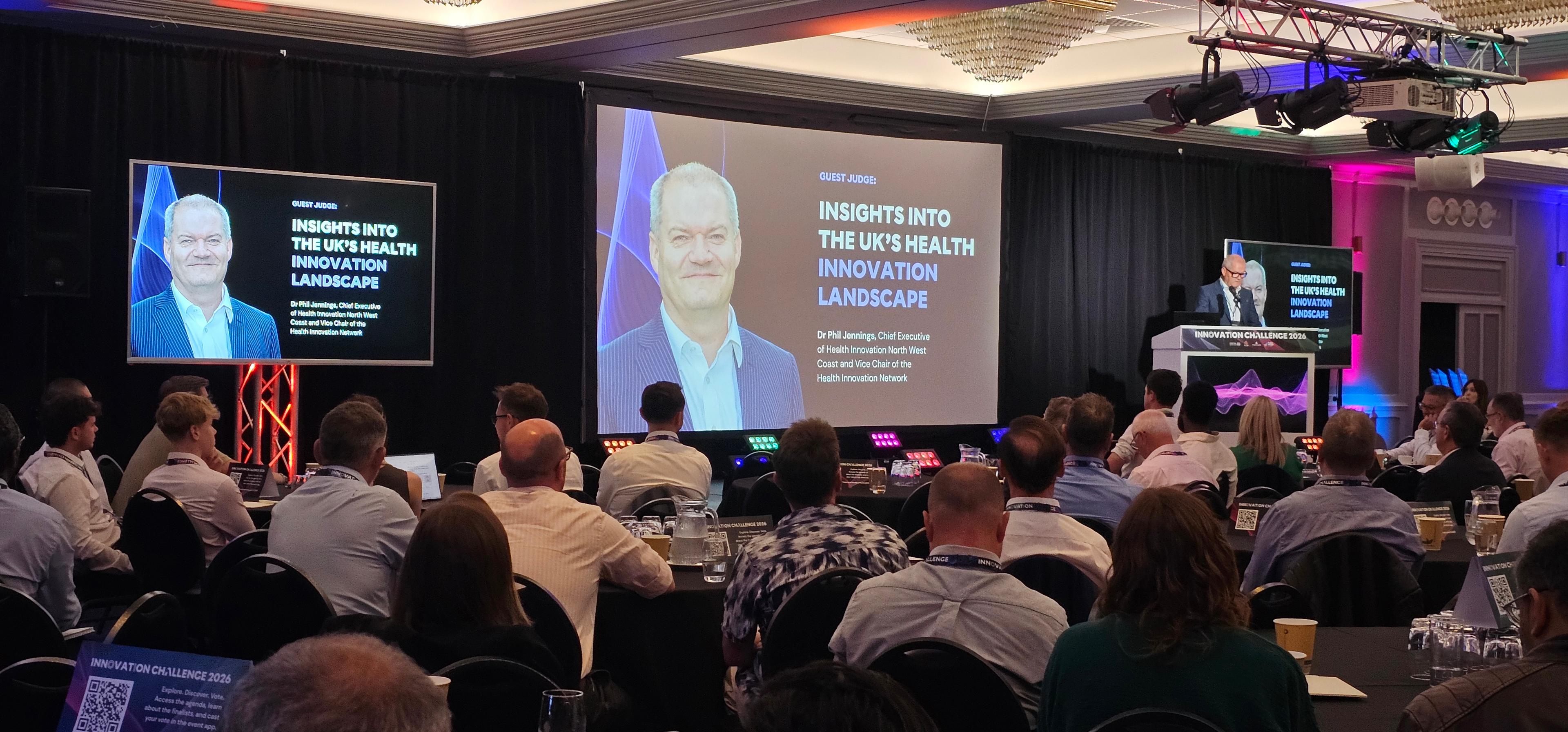
We recently attended the Isle of Man’s Innovation Challenge. The 2026 challenge centres on three core themes: Working Smarter, focused on improving how health and care systems operate, connect and communicate; Wellness, focused on prevention, self-care and early intervention; and Home First, focused on supporting more care in people’s homes and communities rather than in hospital settings.
As well as showcasing some excellent digital health and social care innovations, there were also a number of engaging and thought provoking talks from Dr Keith Grimes GP, Digital Health Innovation Leader and Founder of Curistica, Conor Peacock, Innovation Consultant at Alder Hey and Phil Jennings, Chief Executive Officer at Health Innovation North West Coast.
A few themes really stood out:
1. Innovation must solve real problems, not just look impressive
Several speakers warned against “innovation theatre”. The test is not whether something is exciting, but whether it is genuinely useful, safe and adoptable in the real world.
2. Pilots are not the destination
Healthcare is very good at pilots, but too often innovation gets stuck there. A successful pilot needs a route into routine practice, with clear ownership, funding, training, governance and accountability.
3. People are both the barrier and the unlock
Adoption depends on capacity, capability and culture. Frontline teams need time and space to innovate, the skills to implement change, and a culture where safe experimentation is possible.
4. Pathway matters more than product
Even the best technology will fail if it does not fit into clinical workflows. Implementation needs as much attention as product development.
5. Safety should be an accelerator, not a brake
The event reinforced that safety cannot be an afterthought. But good governance, continuous risk monitoring (especially important when it comes to AI) and “safe by design” approaches can help innovation move faster, not slower.
6. The future is large and small working together
Small teams bring focus, speed and proximity to the problem. Larger systems bring scale, integration and governance. The opportunity is to connect both, rather than set them against each other.
The challenge now is not simply to celebrate innovation in health and social care, but to create the conditions where useful, safe and adoptable ideas can move from pilot to practice and where small teams with deep insight into real problems are empowered to help shape the future of healthcare.